What to Do With Dead or Damaged Tree Branches
How to Identify Dead Branches
Dead or damaged branches are a safety hazard and a sign that your tree needs attention. The first step is learning to spot them before they become a problem.
Dead branches lose their bark, become brittle, and no longer produce leaves. You can identify them by looking at the bark—it will be peeling, gray, or missing entirely, exposing bare wood underneath. Gently bend a suspicious branch; a dead branch snaps easily, while a healthy one bends. In spring and summer, compare the branch to others on the tree. If it has no buds or leaves while others do, it's dead. Some branches may be partially dead, with leaves on one side and bare wood on the other. These are typically damaged by weather, disease, or pest damage and should be watched closely.
You may also notice signs like large cracks in the branch, deep gouges in the bark, or branches hanging at an unnatural angle. These indicate structural damage that will likely worsen over time.
The Dangers of Damaged Branches
Leaving dead or damaged branches on your tree creates real risks. These branches are weak and prone to breaking, especially in wind, ice, or heavy snow.
A large branch falling from height can damage property below—your roof, a car, a shed, or a fence. If someone is underneath when a branch falls, it can cause serious injury. Dead branches also drain resources from the rest of the tree; as they decay, they become entry points for disease and pests. Fungal infections and insects that colonize dead wood can spread to healthy parts of the tree. Over time, this stress weakens the entire tree and may eventually require removal.
Damaged branches that are still partially alive may fail unpredictably. A branch that appears stable can snap without warning during high winds or after a storm, making them just as dangerous as obviously dead wood.
When to Remove Branches Yourself
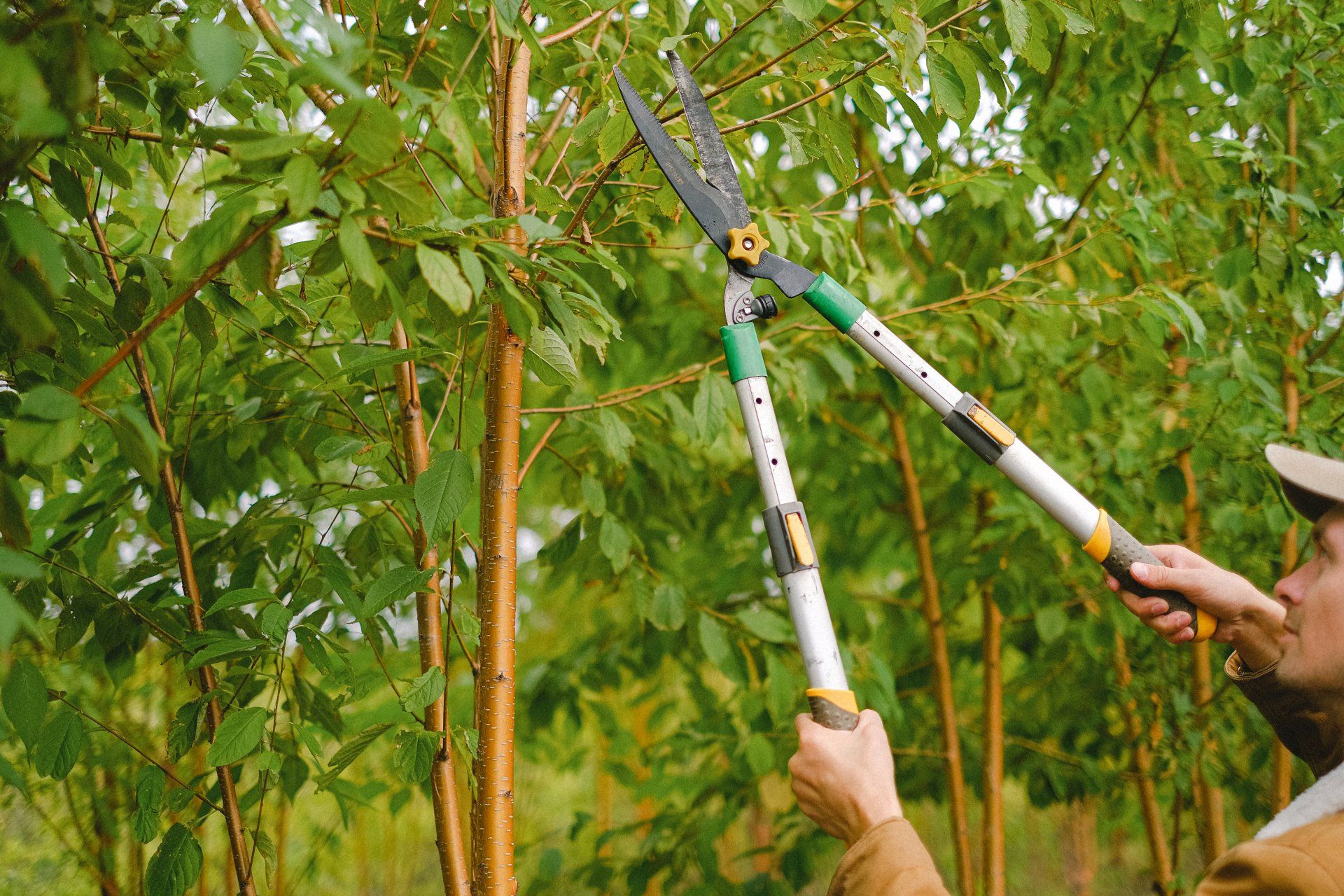
Small, low branches can often be safely removed by a homeowner with basic tools and caution. Know your limits, and do not attempt removals that require climbing, special equipment, or work above your head.
Small Branches You Can Handle
Branches under 2 inches in diameter and low enough to reach safely from the ground are good candidates for DIY removal. Examples include small dead twigs on lower limbs, branches that hang close to windows or gutters, and branches you can support with one hand while cutting. These pose minimal risk if they fall and cause minimal injury if they strike you. Always wear safety glasses and work gloves when cutting.
When to Stop and Call a Professional
Do not attempt to remove branches higher than your comfortable reach without a ladder, branches thicker than 3 inches, or branches that hang over the roof, power lines, or a neighbor's property. Do not cut branches above your head without someone spotting you. Do not use power tools from a ladder. If you're unsure, it's safer and often faster to call a professional.
Proper Cutting Techniques
Cutting a branch incorrectly can damage the tree and create new entry points for disease. Use the right method to promote healing.
The three-cut method is safest for branches thicker than one inch. First, cut from underneath the branch about 12 inches from the trunk, sawing upward until the blade binds (this usually happens about halfway through the branch). Next, cut from above the branch a few inches further out, cutting downward. The branch will break between your two cuts, with the outer piece falling away. Finally, cut the remaining stub flush with the branch collar—the swollen ring where the branch meets the trunk. Do not leave a long stub or cut flush against the trunk itself; the branch collar is where the tree compartmentalizes the wound and heals.
For small branches under an inch thick, a single downward cut from outside the branch collar works fine. Always use sharp tools; dull saws crush wood fibers and slow healing. Sharp tools also make the job safer and faster.
Large Branches and Professional Removal
Branches larger than 3 inches, branches high in the tree, branches over structures, and branches near power lines should be removed by professionals with climbing equipment, safety gear, and insurance.
Professional arborists can safely remove large branches without damaging the tree or the surrounding property. They have rigging equipment that allows them to lower heavy sections to the ground instead of letting them fall. They know how to work around power lines, which is critical—contact with electric lines is dangerous and may cause outages affecting your neighbors. Professionals also understand tree biology and can remove branches in ways that promote healing and tree health rather than creating new problems.
If a branch is visibly threatening your home, a power line, or a neighboring structure, having it removed promptly reduces your liability if it falls and causes damage.
What to Do With Removed Branches
Once branches are cut, you have several options for disposal depending on size and condition.
- Chip or mulch small branches in a wood chipper, then use the chips for garden beds or compost.
- Stack branches in a brush pile that can decompose naturally and provide wildlife habitat.
- Cut small branches into shorter pieces and bundle them for curbside yard waste pickup if your community offers it.
- Take branches to a local yard waste facility or compost center.
- Cut larger logs into firewood if the wood is dry and disease-free (never burn diseased or infested wood).
Do not burn branches without checking local regulations; many areas restrict or prohibit yard burning.
Preventing Future Branch Damage
Regular maintenance reduces the number of dead and damaged branches. Inspect your trees once or twice a year, especially after storms. Prune out dead wood promptly—do not let it accumulate. Proper pruning while trees are young prevents structural problems later.
Avoid common damage causes: do not top trees (removing the top creates multiple weak branches), do not paint pruning wounds (trees heal better without wound dressing), and do not leave stubs when pruning. Make sure trees receive adequate water during dry spells, as stressed trees are more prone to branch dieback. Trees in poor soil or compacted ground also develop more dead branches.
If you notice patterns—many branches on one side dying, or disease symptoms spreading—talk to a tree care professional about what might be wrong. Early intervention can save a tree that might otherwise decline.
When to Call Vonner Family Tree Service
If dead or damaged branches are large, high, near structures, or if you're unsure whether a branch needs to come off, Vonner Family Tree Service can evaluate the situation and handle removal safely. Removing dead wood is part of regular tree maintenance and keeps your property secure.
Frequently asked questions
How do I know if a tree branch is dead?
A dead branch has no leaves, peeling or missing bark, and snaps easily when bent. Compare it to other branches on the tree—healthy branches have buds or leaves while dead ones don't. You can also look for cracks, missing bark, or branches hanging at odd angles.
Is it safe to remove tree branches myself?
Small branches under 2 inches thick and within comfortable reach from the ground are safe to remove with basic tools. Larger branches, branches high in the tree, or branches over structures, power lines, or roofs should be handled by professionals with proper climbing equipment and safety gear.
What should I do with branches after I cut them?
Small branches can be chipped for mulch, bundled for yard waste pickup, or stacked in a brush pile. Larger logs can become firewood if disease-free. Check local regulations before burning any branches, as many areas restrict yard burning.
Can dead branches fall and cause damage?
Yes, dead branches are brittle and break easily in wind or heavy snow, potentially falling on roofs, cars, or people below. They also allow disease and pests to spread through the tree, potentially weakening or killing it over time.
When should I call a tree service about dead branches?
Call a professional if branches are large (over 3 inches), high up, near power lines, or hanging over your roof or neighbor's property. Professional removal is safer, faster, and protects you from liability if the branch causes damage.
Dead or damaged branches should be removed before they fall and cause injury or property damage. Small, low branches can often be DIY projects, but larger or higher branches require professional help.