Tree Trimming vs Tree Pruning: What's the Difference?
Tree trimming and tree pruning are not the same thing, though many people use the terms interchangeably. Trimming is primarily a cosmetic practice that maintains your tree's appearance and controls its size, while pruning is a strategic health practice that removes diseased or problematic branches to improve the tree's structure and longevity.
What Is Tree Trimming?
Tree trimming focuses on the outer growth of your tree. When you trim a tree, you're removing branches to maintain its shape, control its size, and keep it looking attractive. Trimming is mostly cosmetic work—it's about keeping your tree neat and preventing it from becoming overgrown or unbalanced. A trimmed tree looks fuller and more manicured, and it won't have branches extending into your roof, gutters, or neighboring properties. Trimming also removes obviously dead or broken branches on the exterior of the canopy. This outer layer work helps your landscape look intentional and well-maintained. Most trees benefit from trimming once or twice a year, depending on the species and how fast it grows.
How Professional Trimmers Work
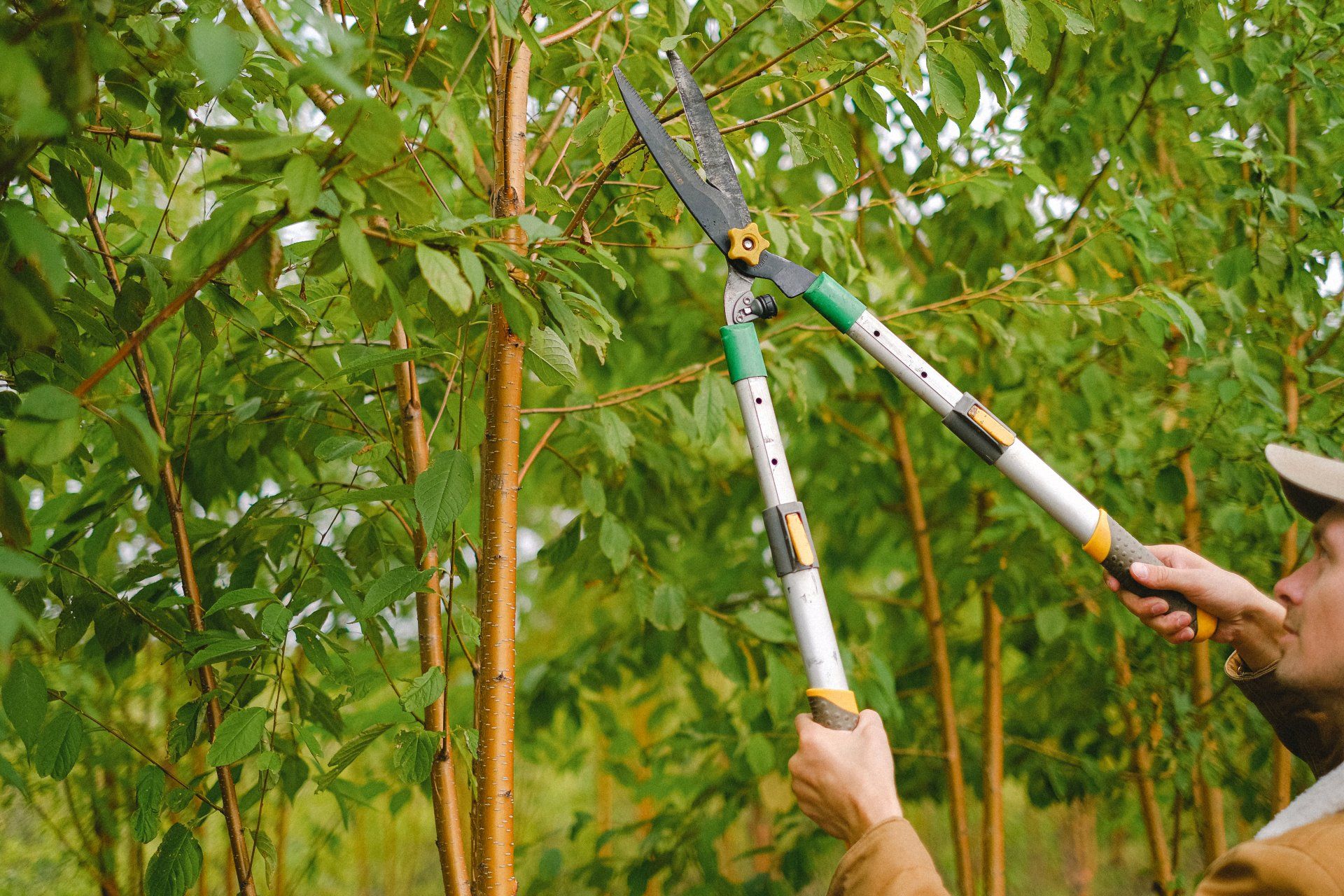
Professional trimmers use hand pruners, hedge shears, and pole saws to remove branches at the canopy's outer edge. The goal is to reshape the tree uniformly and maintain its natural form while removing excess growth. Trimmers follow the tree's natural shape rather than forcing it into an artificial form. This approach respects the tree's biology and results in a neater appearance that lasts longer before the tree outgrows it again. This is lighter work than pruning and doesn't require the same level of internal analysis about branch structure.
What Is Tree Pruning?
Tree pruning is selective branch removal aimed at improving the tree's health, structure, and safety. When you prune, you're making decisions about which specific branches to remove based on the tree's overall condition. You might remove a branch that's rubbing against another, crossing into the center of the canopy, or showing signs of disease. Pruning focuses on the tree's internal structure—removing branches that are growing inward, competing with the main trunk, or creating weak crotches where branches meet. It's more strategic than trimming. A properly pruned tree has better air circulation, reduced disease risk, improved shape as it grows, and stronger branch structure. Pruning happens less frequently than trimming, often every two to three years or when a specific problem appears.
Why Pruning Matters for Tree Health
Diseased branches can spread infection throughout the tree if not removed promptly. Branches that cross or rub against each other create wounds where pathogens enter and pests nest. Weak branch angles—where two branches meet at a narrow angle—are more likely to break under snow load, wind stress, or the weight of heavy foliage. Pruning addresses all of these issues strategically. A tree that's properly pruned will be stronger, live longer, and require fewer emergency removals due to storm damage.
Key Differences Between Trimming and Pruning
Understanding these differences helps you know what your trees actually need. Trimming emphasizes visual appearance while pruning emphasizes structural integrity. The two techniques look different and achieve different results because they target different parts of the tree and use different decision-making processes. Knowing which your tree needs prevents wasted effort and ensures you're addressing the real problem.
- Purpose: Trimming is cosmetic and maintains appearance; pruning is health-focused and improves structure
- Location: Trimming removes outer branches; pruning removes interior or problem branches
- Frequency: Trimming happens once or twice yearly; pruning happens every two to three years or as needed
- Technique: Trimming creates overall shape; pruning creates proper internal structure
- Tools: Trimming uses hedge shears and pole saws; pruning uses hand pruners and saws for selective cutting
- Decision-making: Trimming is consistent and repetitive; pruning requires analysis of each branch and its relationship to others
When to Trim Your Trees
Trim your trees when they're outgrowing their space or when their appearance has become wild or unbalanced. Spring and summer are ideal trimming seasons because trees are actively growing and will fill in the trimmed areas quickly. If a branch is obviously dead or clearly broken, you can trim it anytime without waiting for a seasonal window. Trim before leaves fully return in spring for the clearest view of the branch structure. Regular trimming prevents branches from hitting your house, overhanging driveways, or interfering with utility lines. Young trees especially benefit from frequent trimming to establish a strong, balanced shape as they grow. Trimming also improves light penetration to your lawn and keeps the tree from becoming so dense that it looks unkempt or blocks your view of the street.
When to Prune Your Trees
Prune your trees when you notice signs of disease, damage, or structural problems. If a branch is diseased, dead, or clearly damaged by storms, prune it out immediately rather than waiting for a regular trimming cycle. The sooner you remove a diseased branch, the better chance the tree has to compartmentalize the wound and prevent spread. Prune branches that cross through the center of the canopy, branches that grow downward and create congestion, or branches with narrow angles that will split under stress. Winter is often the best pruning season for deciduous trees because the lack of leaves makes the internal structure visible and pruning wounds close more quickly when the tree is dormant. However, diseased branches should be removed any time you spot them, regardless of season.
Can You Combine Both in One Visit?
Yes—in fact, a professional often combines both techniques during a single visit. While you're trimming the outer canopy for appearance, you can also prune interior branches for health and structure. This makes efficient use of time and equipment and addresses multiple tree needs at once. The difference is the intention behind each cut: some cuts focus on shape and aesthetics, while others target health and structural improvement. A professional arborist understands which branches serve which purpose and removes them accordingly. The combination allows you to improve both the visual appeal of your trees and their underlying health simultaneously, avoiding the need for separate visits when both goals matter.
When to Call a Professional
Both trimming and pruning require an understanding of tree biology and climbing safety. Incorrect cuts can damage trees or create entry points for disease. Large branches high in the canopy require climbing equipment, harnesses, and safety practices beyond what homeowners should attempt. If a tree is more than 15 feet tall, has branches near power lines, or shows signs of disease, call Vonner Family Tree Service. A professional will assess whether your trees need trimming, pruning, or both, and make cuts that keep your trees healthy and attractive for years to come.
Frequently asked questions
What's the main difference between tree trimming and pruning?
Trimming is cosmetic work that maintains your tree's appearance and shape, while pruning is health-focused work that improves the tree's internal structure and removes diseased or problematic branches. Trimming happens more frequently—usually once or twice yearly—while pruning occurs every two to three years or when specific problems arise.
Is it better to trim or prune a tree?
Both are necessary, but they serve different purposes. Most trees benefit from regular trimming to maintain appearance and prevent overgrowth, combined with strategic pruning to remove diseased branches and improve structure. The right choice depends on what your tree actually needs at that moment.
Can you trim and prune a tree at the same time?
Yes, a professional can combine both techniques during a single visit. While trimming the outer canopy for appearance, the arborist can also remove interior branches for health and structure. This approach is efficient and addresses multiple tree needs at once.
When is the best time to trim and prune trees?
Trimming is best done in spring or summer when trees are actively growing. Pruning is often best in winter for deciduous trees because bare branches make the internal structure visible, but diseased branches should be removed immediately regardless of season.
Tree trimming shapes the outer canopy for appearance, while pruning removes interior or problem branches to improve the tree's structure and health. Most trees benefit from both techniques applied strategically at different times.