How to Winterize Your Trees Before the First Frost
Why Winter Preparation Matters
Winterizing your trees before the first frost protects them from heavy snow, ice damage, and winter winds. Taking a few hours now to prepare your trees can prevent costly damage and help them thrive when spring arrives. Winter weather stresses trees in multiple ways. Heavy snow and ice accumulate on weak branches, causing them to snap and fall. Cold temperatures can damage tissue in trees that aren't fully dormant. Frozen ground prevents trees from absorbing water even as dry winter winds pull moisture from branches. The difference between a tree that survives winter healthy and one that emerges damaged or weakened often comes down to preparation done in fall.
Most winter tree damage is preventable. You don't need expensive treatments or equipment—you need to know what to look for and when to take action. Starting before the first frost gives you the clearest view of which branches are truly healthy and which will fail under winter stress.
Inspect Your Trees for Problems
Walk around each tree on your property and look closely at the trunk and branches. You're looking for signs of disease, damage, or structural weakness that winter weather will make worse. Trees already stressed by disease, pest damage, or previous storms need extra attention and may need professional evaluation.
Look for Dead, Diseased, and Crossing Branches
Dead branches are obvious once you know what to look for. Dead wood is gray or brown and won't bend easily when you gently push on it. Living branches are more flexible and have some green under the bark if you scratch it lightly. Diseased branches may have cankers (sunken areas on the bark), oozing sap, unusual discoloration, or clusters of small growths. Crossing branches rub against each other as the tree moves in wind, creating wounds where disease can enter. These weak points fail first under the weight of snow or ice.
Also look at the overall shape of the tree. Does it lean heavily to one side? Are there large branches growing downward from the main trunk? These structural problems make trees more likely to fail in winter storms.
Prune Dead and Weak Branches
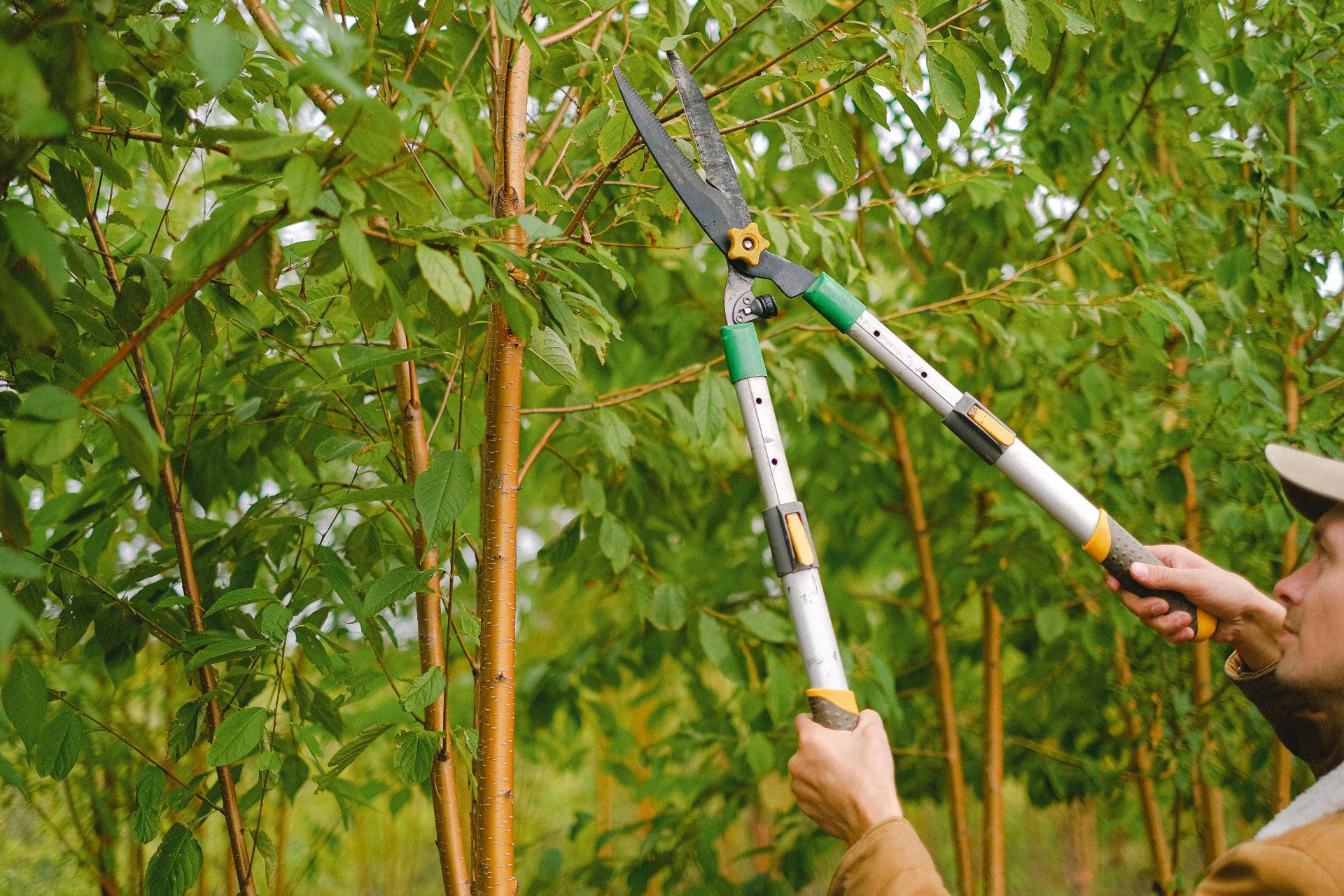
Remove dead wood first. It won't photosynthesize to feed the tree, and it's a entry point for disease and pests. Cut dead branches back to the branch collar—the swollen area where the branch meets the trunk. Avoid cutting into the branch collar itself, which helps the tree heal the wound naturally.
After removing obviously dead wood, remove diseased branches. Cut at least six inches beyond the visible disease, wiping your saw between cuts with a cloth dampened in rubbing alcohol to avoid spreading disease to healthy wood. Prune out crossing branches and branches that grow downward or inward toward the trunk. Remove any branch that hangs over your house, garage, or power lines—winter storms can snap these branches, and removing them now is safer than dealing with a fallen branch later.
Make cuts at the correct angle. Cut at roughly a 45-degree angle just outside the branch collar. Don't leave stubs—they rot and create disease entry points—but don't cut so close that you damage the branch collar. Proper pruning cuts close quickly and protect the tree from infection and pest invasion.
Apply Wound Protection
Large pruning wounds expose the tree's interior wood to disease and insects. While trees can compartmentalize and heal wounds naturally, applying wound sealant speeds healing and reduces infection risk. Use a wound dressing formulated for trees rather than general pruning sealant.
Apply wound sealant to any cut larger than about one inch in diameter. Cover the entire exposed wood surface but don't let sealant run down the trunk. Sealant should stay on the wound itself. Apply it shortly after pruning—don't wait days—while the wood is still fresh. Reapply sealant in early spring if the first coat has started to wear away and the wood hasn't fully closed over.
Mulch Around the Base
Add mulch in a ring around the base of trees, spreading it three to four inches deep and extending it out to the tree's drip line—roughly where the widest branches reach. Mulch regulates soil temperature and retains moisture that tree roots will use throughout winter when frozen ground prevents water uptake.
How to Mulch Properly
Use wood chips, shredded bark, or similar organic mulch. Avoid piling mulch directly against the trunk—leave a few inches of space. Mulch piled against the bark traps moisture and creates conditions for rot and pest damage. Good mulch keeps soil temperature stable, not warm. It insulates against temperature swings that can cause splitting in the trunk during freeze-thaw cycles.
If your tree already has mulch, check its depth. If it's been sitting for a year or more, add more. Mulch breaks down and compacts, losing depth and effectiveness. Fresh mulch before winter gives roots the best protection as temperatures drop.
Water Trees Before Ground Freezes
Watering in fall and early winter seems counterintuitive, but trees need water through winter. Frozen ground prevents root water uptake, but trees continue losing moisture through branches in dry winter air. Trees that enter winter well-hydrated are more resilient to cold damage and drying winds.
Water deeply once or twice in the weeks before the first hard freeze. A deep watering means letting water soak in slowly so it penetrates down to the root zone—not just wetting the surface. Water trees slowly with a hose or soaker, taking 20 to 30 minutes per tree. Check soil moisture before watering by digging down a few inches. If the soil is already moist, wait a few days. Stop watering once the ground freezes hard, as frozen soil won't absorb water and excess water on the surface can create ice hazards.
Remove Trees That Won't Survive Winter
Some trees should be removed before winter, not salvaged. Trees that are mostly dead, heavily diseased, structurally unsound, or leaning dangerously should come down before winter weather fails them entirely. A tree that falls unexpectedly in a winter storm creates hazards—it can damage your home, hit power lines, or block access to your property. Removing hazardous trees now gives you control over timing and placement.
Look for trees with large sections of bare branches, trees leaning at sharp angles, trees with deep cracks in the trunk, or trees with multiple large cavities in the wood. These trees are likely to fail and aren't worth trying to preserve.
Call in a Professional If You're Uncertain
If you're unsure whether a branch or whole tree should be removed, if you're uncomfortable climbing ladders or working with power tools, or if any trees hang over structures or power lines, hire an arborist. Large trees, trees in awkward locations, or complex pruning situations need professional equipment and experience to do safely. Vonner Family Tree Service can assess your trees, remove hazardous branches, and handle tree removal before winter weather strikes. A professional evaluation now prevents emergency calls after a winter storm.
Frequently asked questions
When is the best time to winterize trees?
Fall, before the first frost and while trees are still dormant but before winter weather arrives. This typically means September through November, depending on your climate. Avoid pruning in spring when trees are actively growing, as it stimulates new tender growth vulnerable to frost.
Should I trim all dead branches off my trees before winter?
Yes, remove all dead wood, diseased branches, and branches that cross or hang dangerously. Dead and diseased branches won't support themselves under snow and ice weight, and removing them improves tree health and safety. Leave healthy branches alone unless they pose a direct hazard.
Do I need to seal tree wounds after pruning?
Apply wound sealant to cuts larger than one inch in diameter to reduce disease and pest entry. Smaller cuts usually heal fine without sealant, but larger wounds benefit from protection, especially before winter when trees' natural defenses are slower.
Is it too late to winterize if the first frost has already come?
It's still worth doing basic care like removing dead branches and adding mulch, but you'll have less time before deep winter. Plan to winterize before the first frost next year. If trees look heavily damaged after early frost, call a professional to assess safety.
Should I wrap young trees for winter protection?
Wrapping can protect tender bark on young or newly planted trees from animal damage and sunscald in areas with extreme temperature swings, but it's optional for most established trees. If you wrap, use tree wrap and remove it in early spring so it doesn't trap moisture and cause disease.
Winterizing your trees before the first frost protects them from heavy snow, ice damage, and winter winds. Taking time to prune, inspect, and care for your trees now prevents costly damage and helps them thrive in spring.