How to Safely Trim Tree Branches
Safely trimming tree branches requires proper assessment, the right tools, correct cutting technique, and knowing your limits. Most homeowners can handle small branches from the ground, but larger or higher branches demand professional expertise to prevent injury and tree damage.
Safety First: Assess the Tree and Branches Before You Start
Before touching a single branch, spend time examining your tree from different angles. Look at the branch's size, thickness, location, and weight. A branch thicker than your wrist is generally too large for casual homeowner trimming—these require professional equipment and training. Check where the branch grows: branches above your head, over structures, near power lines, or too high to reach safely should not be trimmed by you.
Examine the tree's overall health too. Is the tree already stressed, leaning, or showing signs of disease? Weak trees are more unpredictable when branches are removed, and cutting on them can cause unexpected failure. Look for dead branches (they're brittle and dangerous), diseased sections (darker bark, oozing sap, fungal growth), and branches that cross or rub against each other. Understanding what you're looking at prevents accidents and poor decisions.
Weather conditions matter as much as the tree itself. Never trim branches during high wind, rain, or storms. Wet bark is slippery, branches are harder to control, and wind can shift your balance or catch a falling branch. Early morning on calm, dry days is ideal. Avoid trimming in extreme heat, which puts physical stress on you while working at height.
Gather the Right Tools and Equipment
Using the wrong tool is the fastest way to cause injury or damage your tree. Each tool exists for a specific branch size and situation.
The Right Tool for Each Job
- Hand pruners (bypass pruners): For branches up to half an inch thick. They're precise and safe for small cuts.
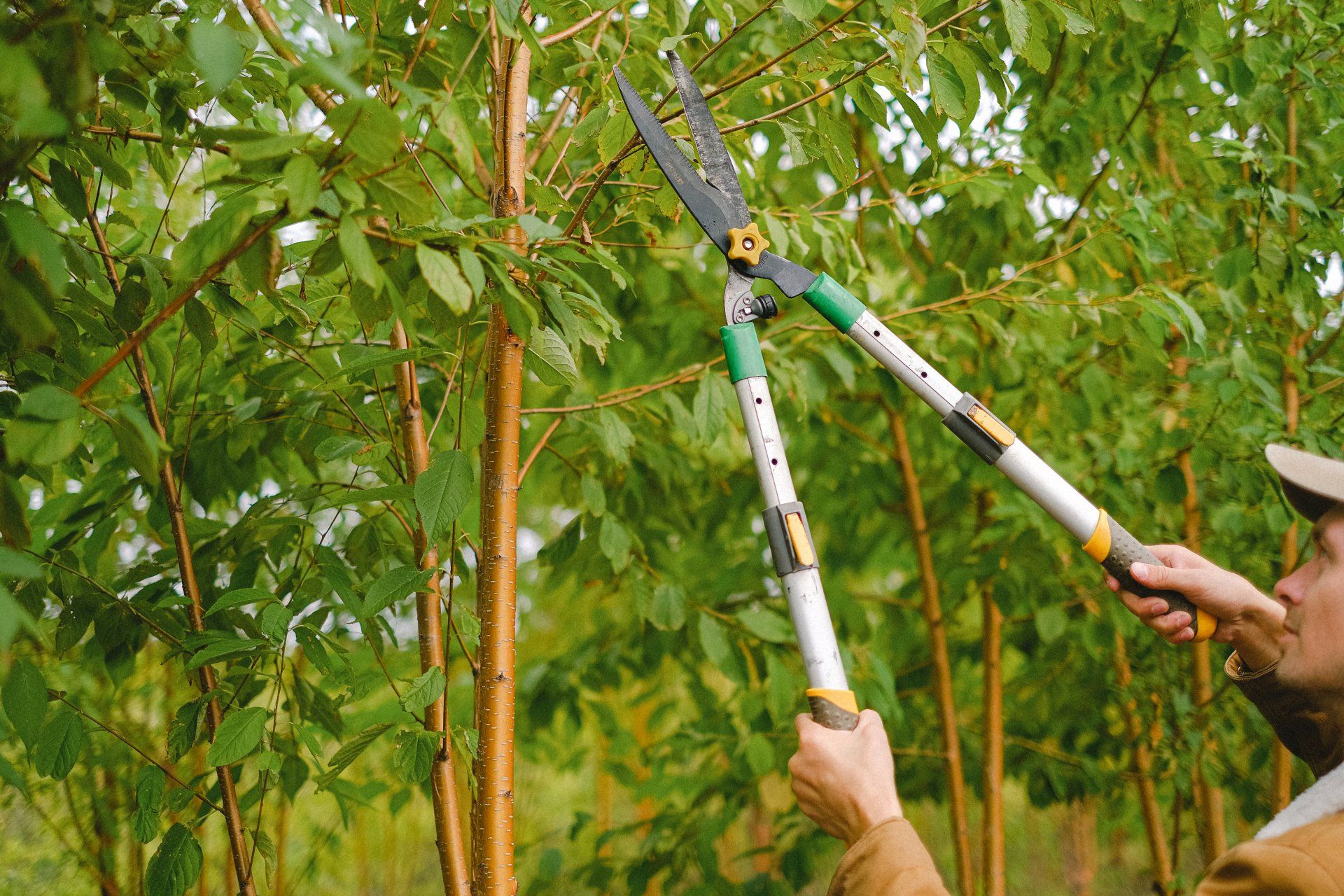
- Lopping shears: For branches between half an inch and two inches. The longer handles give more leverage and reach.
- Pruning saws: For branches one to three inches thick. A curved pruning saw works faster than lopping shears on larger wood.
- Pole saws: For branches up to about two inches thick, reaching eight to fifteen feet high. These require steady balance and upper body strength.
Every tool must be sharp. Dull blades crush wood instead of cutting cleanly, leaving ragged wounds that invite disease. Dull tools also require more force, increasing your risk of slipping. Before starting, sharpen pruners and saws, or use new blades if sharpening isn't practical.
Safety equipment is non-negotiable. Wear sturdy boots with good grip, long pants to protect your legs, a long-sleeved shirt, and eye protection. If using a ladder, wear a hard hat. Keep your workspace clear of trips and obstacles, especially if you're working on a ladder. Never work alone—have someone present who can call for help if needed.
Understand Proper Cutting Technique
The way you cut matters more than many homeowners realize. A bad cut damages the tree and creates an entry point for disease and pests. A good cut heals cleanly.
The golden rule: always cut at the branch collar. The branch collar is the slight swelling where the branch meets the trunk or larger branch. This zone contains specialized cells that seal the wound. Cut just outside this collar—not flush against the trunk (which removes the protective collar and leaves a large, slow-healing wound) and not far away (which leaves a stub that rots and invites insects). The cut should be angled slightly so water runs off, not into the wound.
For larger branches, use the three-cut method to prevent the branch from tearing bark as it falls. First, make an undercut about six inches away from the collar, cutting upward until the saw starts to bind. Second, make a top cut slightly further out than your first cut, sawing downward until the branch falls. Third, cut the remaining stub back to the branch collar with a final clean cut. This prevents bark damage and a messy wound.
Never use wound dressing or tree paint unless the branch wound is actively bleeding sap. Trees heal better when left exposed to air. Wound dressing can actually trap moisture and promote rot inside the tree.
Know When to Cut and When Not To
Timing affects both safety and tree health. Early winter or early spring is generally safest and best for the tree. Avoid cutting during late spring and summer when the tree is actively growing and vulnerable to disease. Don't trim more than a quarter of a tree's crown in one year—removing too much foliage stresses the tree and can cause die-back or disease.
Never top a tree by cutting branches back to stubs. Topping destroys the tree's structure, encourages weak growth, and causes long-term health problems. Never remove all lower branches to create an artificial shape. Never cut into the main trunk unless removing an entire damaged branch at its base.
Dead branches can be removed any time—in fact, removing dead wood improves appearance and safety. However, branches that are just thin or small should usually stay: they don't hurt the tree, and removing too many foliage-bearing branches weakens it. Be selective and conservative with cuts.
Work Safely from the Ground
Most branch trimming should happen from the ground. If you need a ladder, you need to reconsider whether this job is safe for you to do. Falls from ladders are serious injuries, and working overhead on an unstable surface is never worth the risk.
When using a ladder, never overreach. If you can't make the cut with your arm bent slightly, don't reach further—move the ladder instead. Always maintain three points of contact with the ladder. Never stand on the top rung. Don't carry tools while climbing; use a rope to haul them up after you're safely positioned. Place the ladder on level ground, not on rocks, soil, or sloping terrain. If the ladder shifts, get down immediately and reposition it.
Better yet, use a pole saw from the ground. Pole saws let you trim branches eight to fifteen feet high without a ladder, but they're tiring to use and require practice. If you're uncomfortable holding a power tool overhead, this isn't the right approach for you either. A pole saw is also heavier and more dangerous than hand tools if you lose balance.
Never trim branches hanging over power lines, near structures, or in any way that could cause them to strike something or someone during the fall. Branches near power lines require a utility company or licensed professional.
When to Call a Professional
There's no shame in knowing your limits. In fact, recognizing when a job is beyond your skill saves injuries and expensive mistakes. Call a professional if the branch is more than three inches thick, if it's higher than fifteen feet above ground, if it's near power lines, if it requires climbing into the tree, if you're unsure about the tree's health, or if you feel uncomfortable for any reason. For jobs like this, Vonner Family Tree Service has the equipment, training, insurance, and experience to work safely on large or complex trees.
Professional arborists can assess whether a tree is safe to work on and what the best approach is. For most homeowners, a few hours and the cost of professional service is far better than an emergency room visit or a permanently damaged tree.
Common Mistakes to Avoid
Learning what not to do is as important as learning what to do. The most common mistakes are overreaching from a ladder, using dull tools, making cuts too close to the trunk or too far from it, removing too much foliage, attempting branches that are too large or high, and working in bad weather or alone. Each of these mistakes increases injury risk or causes lasting tree damage.
Another mistake is ignoring the branch collar. Many people cut branches flush with the trunk, assuming this heals faster. It doesn't—the tree's branch collar is specifically designed to seal the wound, and removing it removes that protection. Equally wrong is leaving a stub by cutting too far from the collar.
Don't assume that cutting randomly in the middle of a tree improves airflow or appearance. It creates an unnatural, weakened structure. Instead, remove dead branches, branches that cross or rub, and branches that are growing downward or inward. These cuts have purpose and improve the tree's health.
Aftercare and Tree Health
After you've made your cuts, leave the tree alone. Don't apply wound dressing, paint, or sealer unless sap is actively bleeding. The tree will compartmentalize the wound naturally, and covering it often prevents proper healing. Don't fertilize immediately after pruning—this can encourage weak growth.
Water the tree deeply and regularly during the next month if your area is dry. A tree that's just been pruned is slightly stressed, and consistent moisture helps it recover. If you've removed a significant amount of foliage, the tree may take a full growing season to look balanced again. This is normal.
Monitor the tree over the next few weeks. If you see signs of disease, pest damage, or unexpected branch death, these may indicate the tree was already stressed. In that case, professional advice can help you save the tree or decide whether it needs to be removed.
Frequently asked questions
What is the branch collar and why does it matter?
The branch collar is the slight swelling where a branch meets the trunk or larger branch. It contains specialized cells designed to seal the wound after the branch is removed. Cutting just outside the branch collar allows the tree to heal properly; cutting flush against the trunk removes this protection and leaves a large, slow-healing wound.
Can I use wound dressing or tree paint after cutting branches?
No, wound dressing and tree paint should be avoided on most cuts. Trees heal better when wounds are left exposed to air. Wound dressing can trap moisture inside the tree and actually promote rot. Only apply wound dressing if the branch wound is actively bleeding sap, which is rare.
When should I trim branches, and when should I avoid it?
Early winter and early spring are ideal for trimming. Avoid cutting during late spring and summer when trees are actively growing and more vulnerable to disease. Never trim in high wind, rain, or storms. Don't remove more than a quarter of a tree's crown in one year, as this stresses the tree.
What size branches can I safely trim myself?
You can safely trim branches up to about one inch thick from the ground using a pruning saw. Branches thicker than your wrist (about one and a half inches) or those higher than fifteen feet above ground should be left to professionals. If you need a ladder to reach a branch, reconsider whether it's safe for you to trim.
What is the three-cut method for larger branches?
The three-cut method prevents bark damage as a branch falls. First, make an undercut six inches from the branch collar, cutting upward until the saw binds. Second, make a top cut slightly further out, cutting downward until the branch falls. Third, cut the remaining stub back to the branch collar with a final clean cut.
Safely trimming tree branches requires careful assessment of the branch size and location, the correct tools, proper cutting technique at the branch collar, and honest recognition of when a job requires professional help. Most homeowners can handle small branches from the ground, but larger or higher branches demand professional expertise to prevent injury and tree damage.