How to Prepare Your Trees for Fall Storms
Why Fall Storms Damage Trees
Fall and early winter bring the conditions that test a tree's structural integrity most severely. Heavy winds combined with rain and early snow create a perfect storm of stress. Wet snow is particularly damaging because it clings to branches, adding weight that summer branches—when they were still pliant and fresh—could handle easily. By fall, that same wood has hardened and become brittle. Wind loads that trees withstood in spring now snap branches that have weakened over the growing season. Trees that have been neglected, are diseased, or have poor architecture fail first, but even healthy trees can suffer catastrophic damage if they haven't been properly prepared.
Inspect Your Trees for Structural Problems
Walk your property in early fall and look closely at each tree's framework. Start from the ground and work upward. Watch for branches that cross over other branches, creating friction and weak attachment points where they meet the trunk. Look for branches that emerge from the trunk at narrow angles—these are far more prone to splitting under load than branches that grow out at wider, 45-degree angles.
Check for branches that are obviously larger or heavier on one side of the tree than the other. Lopsided trees are unbalanced in the wind and will experience uneven stress. Also inspect the crotches—the angles where major branches meet the trunk—for bark that has grown into the gap. This included bark is a sign of poor attachment and a weak point waiting to fail. Any branch that is already cracked, splintered, or partially hanging should be marked for removal.
Remove Dead Wood and Disease
Dead branches snap and fall in storms. They offer no flexibility and no strength. Walk the perimeter of each tree and look up into the canopy. Branches that have no leaves, no green shoots, and no bark are dead and must go. Even small dead twigs and branches should be removed because they are the first to fail and create a hazard.
If your tree shows signs of disease—fungal growth, cankers, oozing sap, or unusual discoloration—address it before storm season. Disease weakens wood structure and reduces the tree's ability to compartmentalize wounds. A diseased tree is far more likely to split under stress. If you're uncertain whether a branch is truly dead or if the tree has disease, err on the side of caution and call a professional to assess before the storms arrive.
Thin Dense Canopies
A thick, dense canopy acts like a sail in the wind. It catches more wind force, creates more drag, and puts tremendous stress on the trunk and root system. Professional thinning reduces this wind load significantly. The goal is to remove inner branches and create space for wind to pass through rather than pushing against solid foliage.
Proper thinning also improves air circulation, which helps the tree dry faster after rain and reduces disease pressure. It makes the tree lighter and more flexible. When you thin a canopy correctly, the tree sways and moves more naturally in the wind instead of resisting it as a rigid object. This is one of the single most effective preparations you can make. Thinning is not the same as topping—never cut the leader or main trunk short. Remove branches throughout the canopy to open it up.
Check Soil and Root Health
A tree's roots anchor it against wind. Poor soil conditions, compaction, and shallow root systems make trees vulnerable. If your tree is in compacted soil, surrounded by pavement, or in an area with poor drainage, its roots may be shallow and weak. Waterlogged soil also weakens root systems because roots need oxygen.
Early fall is a good time to improve soil conditions if you still have weeks before storm season. Aerate the soil around the tree's drip line (where the outermost branches are). Add compost to improve soil structure. Make sure water drains away and doesn't pool around the base. If you know the tree was recently planted or has a history of stress, it may be worth bracing or guying for the storm season to reduce movement while roots establish themselves.
Strategic Pruning Improves Wind Resistance
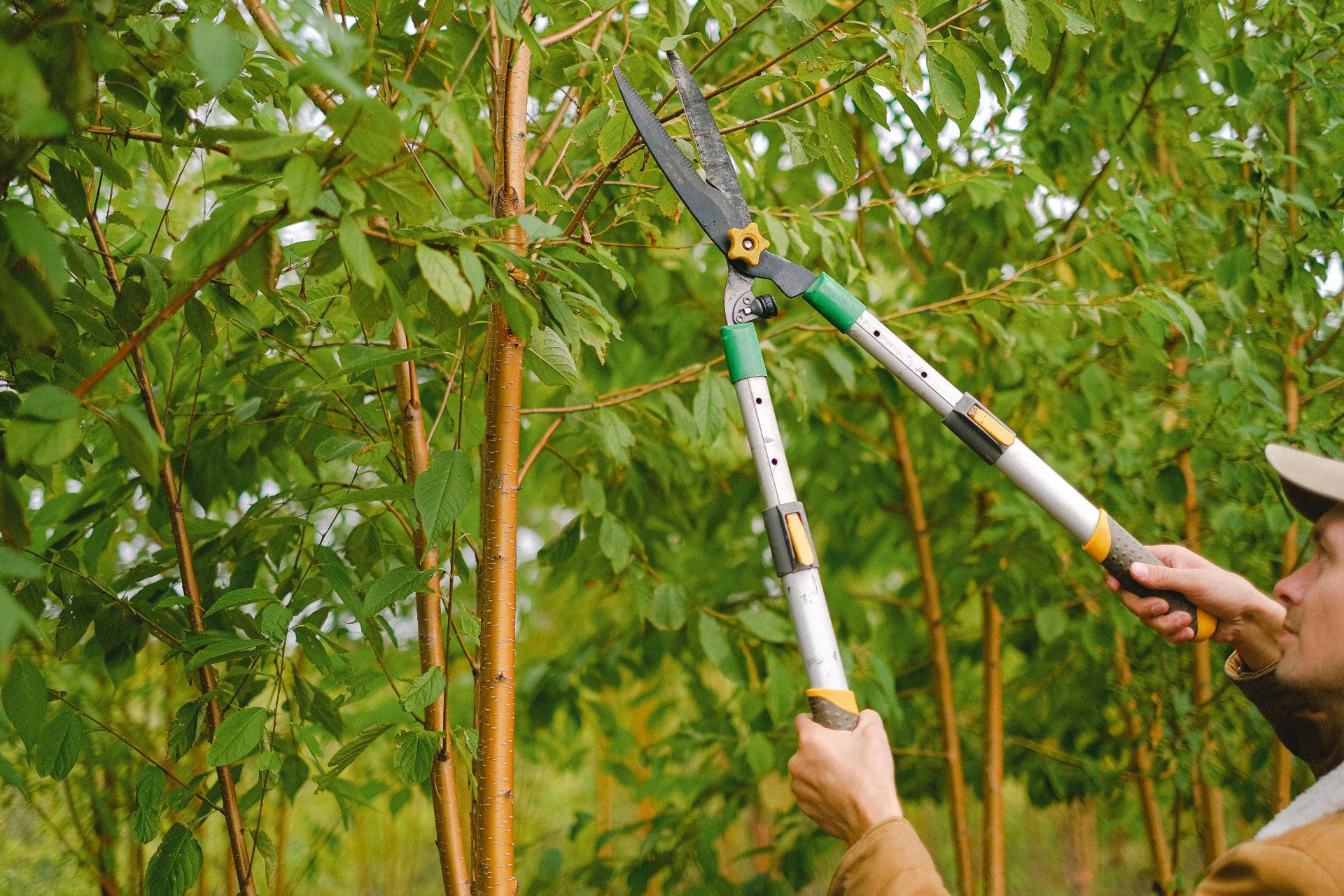
Pruning is not a single action—it's a series of decisions about which branches to remove and how to cut them properly. The best approach focuses on creating a strong central leader and well-spaced major branches.
- Remove branches that cross, rub, or touch one another
- Eliminate branches growing downward or inward toward the trunk
- Space large branches around the trunk so none is directly above another
- Remove branches smaller than one-third the diameter of the branch they're attached to
- Cut branches back to the branch collar—the raised area where the branch meets the trunk—never flush with the trunk
These practices improve the tree's structural efficiency and its ability to move with the wind rather than resist it.
Support Young or Weak Trees
Young trees, recently transplanted trees, and trees with naturally weak wood or upright growth habits may benefit from temporary bracing or cables. Bracing connects major branches to reduce movement and stress at the base. Cabling supports upper branches and prevents splitting at crotches. These are not permanent fixes—they buy time for young trees to develop stronger wood and more robust root systems, or they protect vulnerable older trees through one particularly severe season.
Bracing and cabling should only be installed by professionals who understand the biology of the tree and the engineering of the support system. Improper installation can damage the tree and create new weak points.
Schedule Professional Assessment Before Storm Season
The best time to prepare your trees is now, weeks before fall storms arrive. If you're uncertain about the health of your trees, the safety of a branch, or the best approach to pruning, contact a tree care professional. Vonner Family Tree Service can assess your trees, identify hazards, and recommend the work needed to reduce storm damage and keep your property safe. Professional arborists have the training to see problems you might miss and the equipment to work safely in tall trees. Waiting until after a storm hits means emergency work, higher costs, and damage that might have been prevented.
Frequently asked questions
When is the best time to prepare trees for fall storms?
Early fall, at least a month before typical storm season arrives, is ideal. This gives you time to complete pruning and other work before the weather becomes unpredictable. If storms are already frequent in your area, prepare even earlier in late summer.
Can I prune my own trees to prepare them for storms?
Small dead branches and obvious hazards can be safely removed by homeowners with basic tools. However, pruning large branches or climbing into the canopy is dangerous and should be left to professionals. Improper cuts can damage the tree or create new weak points, defeating the purpose of preparation.
What's the difference between thinning and topping?
Thinning removes branches throughout the canopy to reduce wind load and improve structure. Topping cuts the main trunk or leader short, which is harmful and creates many weak sprouts. Never top a tree—it weakens the tree and doesn't help it survive storms.
How do I know if a tree is too weak to save before a storm?
Trees with large sections of dead wood, significant disease, deeply split trunks, or severe leaning should be evaluated by a professional. Some trees may be too risky to keep, especially if they hang over your home or power lines. A professional assessment will determine whether pruning and support can make the tree safe, or whether removal is the better choice.
Fall and early winter storms bring heavy winds and wet snow that damage weak branches and stressed trees. Proper pruning, inspection, and professional care before the season arrives can significantly reduce storm damage and keep your property safer.