How to Prepare Trees for Winter
Winter can be harsh on trees, causing frost crack, branch breakage, and disease if they're not properly prepared. Starting your winter tree preparation in fall—when temperatures begin to drop but the ground is still workable—gives your trees the best chance to survive cold months and emerge healthy in spring.
Inspect Your Trees for Health and Damage
Before winter arrives, walk around your property and examine each tree closely. Look for signs of disease, such as cankers (sunken areas on bark), unusual discoloration, or oozing sap. Check the trunk and branches for pest damage, including holes, tunnels under the bark, or clusters of insects. Weak or diseased trees are more vulnerable to winter damage and may need professional attention before the cold season begins.
Also inspect the overall structure of the tree. Identify branches that cross over each other, grow downward, or form narrow angles with the trunk. These weak attachment points are prone to breaking under the weight of snow or ice. Dead branches are obvious—they lack leaves in growing season and snap easily when you bend them. Pay special attention to branches near your home, power lines, or other structures, as a heavy limb that breaks in winter could cause serious damage.
Remove Dead and Diseased Branches
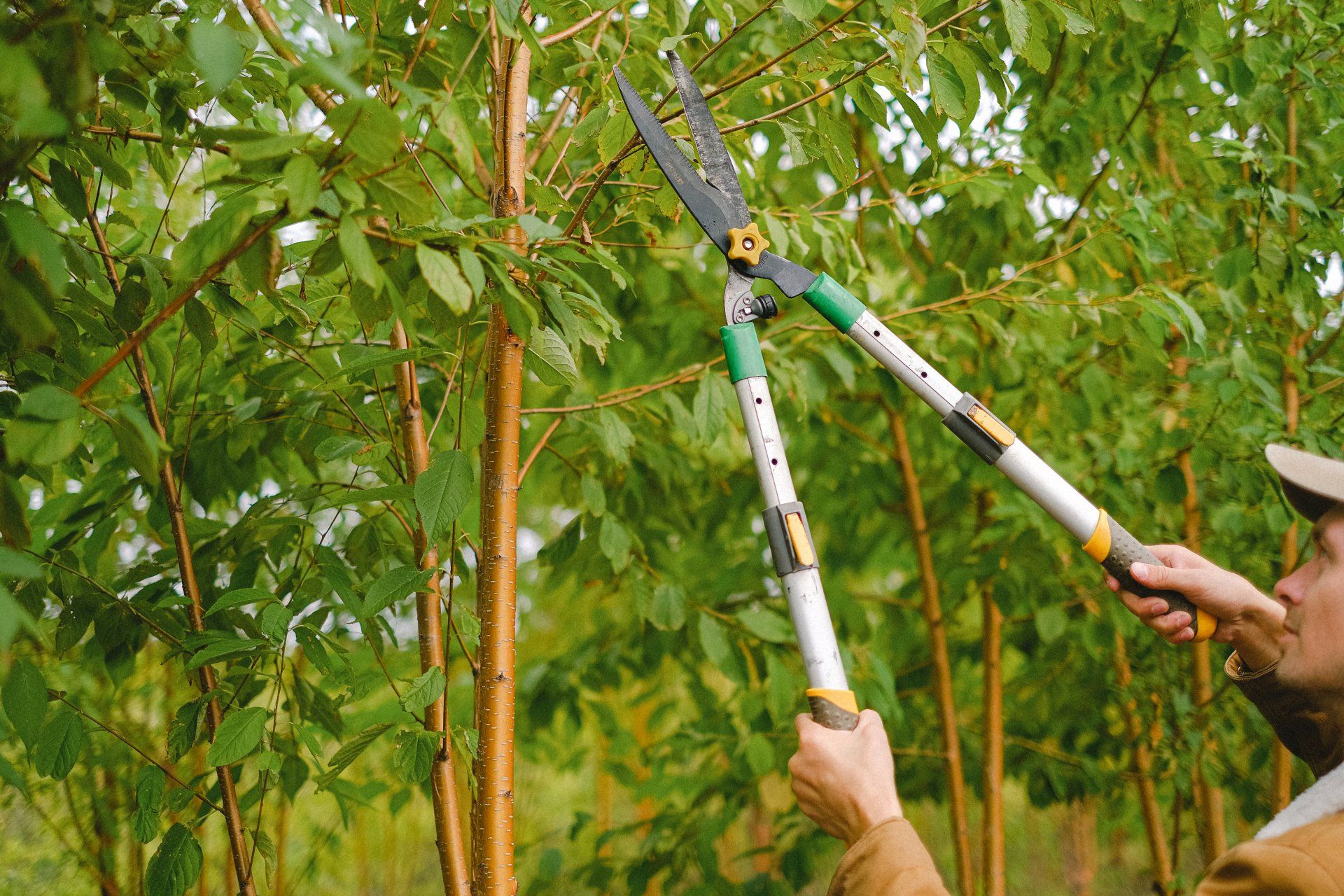
Dead and diseased branches should come off completely before winter. These branches won't survive the cold anyway, and leaving them on creates entry points for pests and disease that can spread to healthy parts of the tree. Removal also reduces the overall weight the tree carries through winter, lowering the risk of branch breakage from snow and ice.
How to Cut Branches Properly
Make three cuts when removing larger branches. First, make an undercut about 2 to 3 feet from the trunk, cutting upward until the saw starts to bind. Second, make an overcut from the top, slightly further out than the undercut, cutting downward until the branch falls. Third, cut the remaining stub flush with the branch collar—the slightly thickened area where the branch meets the trunk. This technique prevents tearing bark and allows the tree to seal the wound naturally. Always cut outside the branch collar; never cut flush with the trunk, as this damages the protective collar and leaves a large open wound.
Prune to Improve Tree Structure
Beyond removing dead wood, strategic pruning improves a tree's ability to withstand winter stress. Thin out crowded branches to increase air circulation and light penetration, which reduces fungal disease. Remove branches that cross or rub together, as these create wounds and weak points. Select a dominant leader if the tree has multiple main stems, and remove or reduce competing stems so one clear trunk remains.
Improve branch angles by removing limbs that attach at narrow angles (less than 45 degrees from vertical). These angles create weak connections that split under snow load. Branches growing at wide angles, closer to horizontal, create stronger attachment points. Pruning also shapes the tree to shed snow and ice more effectively, as conical shapes with properly spaced branches allow precipitation to slide off rather than accumulate.
Apply Protective Treatments
Young trees with thin bark and trees in open, windy locations benefit from protective treatments. Tree wrap—a light-colored, biodegradable wrap—reflects winter sun and reduces frost crack, a common winter injury where the trunk cracks due to temperature fluctuations between sunny days and freezing nights. Wrap the trunk from the base up to the lowest branches, removing it in early spring to prevent girdling.
Anti-desiccant spray creates a protective coating on leaves and bark that reduces water loss during winter. This is especially helpful for evergreens, which continue to lose moisture even when the ground is frozen and roots cannot replace it. Apply anti-desiccant in late fall when temperatures are above freezing but dropping. Do not apply pruning sealant to fresh cuts; trees heal best when wounds are left open to air-dry naturally.
Mulch Around the Base
Apply 2 to 4 inches of mulch around the base of each tree, extending out to the drip line (where the outermost branches reach). Mulch insulates the root system, moderating soil temperature and preventing the freeze-thaw cycles that can heave roots out of the ground. It also retains soil moisture, which is crucial since frozen soil cannot supply water to the tree.
Use organic mulch—wood chips, shredded bark, or compost—that will break down and improve soil structure. Keep mulch a few inches away from the trunk itself to prevent moisture buildup that encourages disease and pest damage. Mulch too close to the trunk can also create favorable conditions for mice and rabbits to chew bark throughout winter.
Water Trees Before Soil Freezes
Even though temperatures are dropping, trees still need water in fall and early winter. Roots continue to absorb water as long as the soil isn't frozen. A deep watering in late fall helps trees enter dormancy with full hydration, reducing stress during winter months. Water thoroughly so moisture reaches deep into the root zone, not just the surface layer.
Once the ground freezes hard, watering becomes impossible. If fall and early winter are dry, this dormant-season drought can be just as damaging as summer drought, causing desiccation and twig dieback. Tree care professionals recommend watering every one to two weeks in the absence of snow cover, as long as the ground remains workable. Stop watering once the soil freezes solid.
Complete Your Winter Preparation Checklist
Before the coldest weather arrives, work through this checklist to ensure your trees are ready. Avoid pruning in late fall or winter when new cuts cannot heal before dormancy ends. Also avoid fertilizing in fall, as it stimulates new tender growth that is especially vulnerable to winter damage. Instead, time fertilization for early spring and early summer.
Use this list to stay on track:
- Inspect trees for disease, damage, and structural weakness
- Remove dead, diseased, and damaged branches
- Prune to improve structure and air circulation
- Apply tree wrap and anti-desiccant if needed
- Mulch around the base to insulate roots
- Water deeply before soil freezes
- Monitor branches during heavy snow or ice storms
If heavy snow or ice storms are in the forecast and branches are bending dangerously low, carefully brush or gently shake snow off horizontal branches. Do not hit branches or attempt to break ice off; this causes more damage than the weight itself. If branches do break during winter or if you're uncertain whether a tree can withstand the season ahead, Vonner Family Tree Service can evaluate your trees and handle any necessary pruning or removal to keep them healthy and safe.
Frequently asked questions
When should I prepare trees for winter?
Begin in early fall when temperatures start dropping but the ground is still workable. Complete major pruning by mid-to-late fall before the coldest weather arrives. Avoid pruning in late winter, as new cuts cannot heal properly before growth resumes in spring.
Can I prune trees in winter?
It's best to finish pruning in fall while the tree is dormant but before harsh winter weather. Winter pruning can damage trees and leave open wounds vulnerable to cold and disease. If branches are hazardous, consult a professional about safe winter removal.
Should I wrap young trees for winter?
Tree wrap benefits young trees with thin bark and trees in windy, sunny locations where frost crack is common. Wrap the trunk in late fall and remove it in early spring to prevent girdling. Older trees with thick, established bark typically don't need wrapping.
What should I do if a branch breaks during winter?
Remove broken branches as soon as safely possible to prevent disease from entering the wound. Make a clean cut at the branch collar rather than leaving a stub. If the branch is large or near power lines, contact a professional for safe removal.
Trees need inspection, pruning, mulching, and protective treatments before winter arrives to prevent frost damage and disease. Start preparations in fall when temperatures drop but ground is still workable.